Showing posts with label Articles. Show all posts

Sunday, 24 March 2013

Δωρεάν Βιβλία-Επιστημονικά Άρθρα στο Διαδίκτυο

Για περισσότερο Δωρεάν Υλικό επισκεφτείτε το website μου: 


Ελεύθερη διακίνηση γνώσης σημαίνει ελεύθερη πρόσβαση στη μάθηση.  Κάτι το οποίο το θεωρούμε αυτονόητο αλλά δυστυχώς δεν είναι. 

Σας παραθέτω ιστότοπους τους οποίους επισκέπτομαι συχνά και πραγματικά αποτελούν μία πλούσια πηγή δωρεάν ψηφιοποιημένου υλικού διαφόρων πεδίων, επιστημονικών ή/και μη, ελληνικών ή/και ξενόγλωσσων. 

Ελληνικά & Ξενόγλωσσα Βιβλία:

Ελληνικά Βιβλία:
Ξενόγλωσσα Βιβλία:

Aποθετήρια Aνοικτής Πρόσβασης:

Και τέλος θα σας παραθέσω κάποια sites τα οποία σας δίνουν τη δυνατότητα να εκδώσετε δωρεάν τα βιβλία σας!!!
Δήμητρα Ζερβάκη, ΕΜΒΑ, PMP, TTT

Image Source: http://batew.com

Tuesday, 29 January 2013

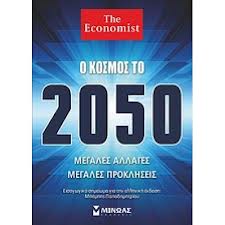
Η Αποκατάσταση της Αλήθειας για την Αρχαία Ελληνική Σκέψη-Βιβλίο "Ο Κόσμος το 2050"

Στο πλαίσιο της παρουσίασης του βιβλίου «Ο Κόσμος το 2050» επεσήμανα το «ατόπημα» του συντάκτη κ. Geoffrey Carr σχετικά με την αναφορά του στην Αρχαία Ελληνική Σκέψη-Επιστήμη και πώς αυτή αντιμετωπίστηκε από την επιστημονική κοινότητα της Δύσης.

Προέτρεψα τους αναγνώστες του blog μου να διαμαρτυρηθούν είτε στον εκδοτικό οίκο, είτε στον κ. Παπαδημητρίου, είτε στο ίδιο το The Economist. Όμως η προτροπή δεν φτάνει!!! Χρειάζεται και action!!! Και άλλωστε όταν ζητούμε από τους άλλους να κάνουν κάτι πρέπει πρώτα απ’ όλα να το κάνουμε εμείς οι ίδιοι. Γι’ αυτό το λόγο λοιπόν απευθύνθηκα σε όλους τους προαναφερόμενους επισημαίνοντας το συγκεκριμένο τμήμα του βιβλίου και εκφράζοντάς τους την άποψή μου και τη θέση μου. 

Και το «μήνυμα» που πήρα ήταν ελπιδοφόρο!!!

Είχα άμεση απάντηση από τον CEO & Managing Director του εκδοτικού οίκου ΜΙΝΩΑΣ, τον κ. Κωνστανταρόπουλο την οποία σας την παραθέτω:

Αγαπητή κα Ζερβάκη, 

Ευχαριστούμε πολύ για το μήνυμά σας και για την εύστοχη παρατήρησή σας. 

Η γνώμη του συντάκτη, ένας εκ των πολλών στο βιβλίο του Economist, δεν ταυτίζεται με τη δική μας. Ο συντάκτης του συγκεκριμένου άρθρου, Geoffrey Carr, πέφτει σε ατόπημα προχωρώντας σε μια γενίκευση που αδικεί εμφανώς την ελληνική σκέψη και την πρωτοπορία αυτής. Σε ένα πολυσέλιδο βιβλίο όπως είναι  «Ο Κόσμος το 2050» υπάρχει η πιθανότητα να μας ξεφύγουν ορισμένα λάθη, πόσο μάλλον δε όταν η αναφορά αυτή περιορίζεται σε ορισμένες αράδες. Το άρθρο του συντάκτη αναφέρεται περισσότερο στον τομέα της φυσικής και η βασική άποψη έχει να κάνει με τη ρήξη με την καθεστηκυία τάξη ως προϋπόθεση της εξέλιξης της επιστήμης. Ωστόσο ο αρθρογράφος με την αναφορά στην ιατρική μέσω του Γαληνού, χωρίς να γίνεται λόγος στον Ιπποκράτη, στον Διοσκουρίδη στον τομέα της φαρμακολογίας, όπως πολύ σωστά επισημαίνετε, ή ακόμη και στον Θεόφραστο στη βοτανική κ.ο.κ., παραλείπει μια σημαντική πτυχή της ελληνικής σκέψης και αγνοεί ότι η ελληνική πνευματική κληρονομιά εξίσου αποτελεί βάση για την πρόοδο και την εξέλιξη της επιστήμης.

Στην επόμενη ανατύπωση του βιβλίου η συγκεκριμένη παράγραφος θα διαμορφωθεί ώστε να αποκατασταθεί η αντικειμενική εικόνα για την ελληνική προσφορά στη δυτική σκέψη και βεβαίως θα ενημερωθεί και ο αρχισυντάκτης του βιβλίου προκειμένου να επιδιώξει την ίδια διόρθωση και σε όλες τις άλλες γλώσσες, στις οποίες κυκλοφορεί το εν λόγω βιβλίο.

Ευχαριστούμε πολύ για το ενδιαφέρον που δείχνετε για τις εκδόσεις μας. Χαιρόμαστε πάρα πολύ όταν οι αναγνώστες μας διαβάζουν τόσο προσεκτικά τα βιβλία που εκδίδουμε και με εύστοχα σχόλια συνεισφέρουν στην ποιότητα αυτών, συμβάλλοντας σε έναν δημιουργικό διάλογο.

Με εκτίμηση,

Yannis Konstantaropoulos
CEO & Managing Director / MINOAS SA
 

Και ο λόγος που σας την παραθέτω είναι για να σας αποδείξω ότι: (α) πρέπει να αντιδρούμε όταν πιστεύουμε ότι έχουμε δίκιο αλλά πάντα με επιχειρήματα, (β) η σωστή επικοινωνία, η συνεργασία και η "ανοιχτοσύνη" ΠΑΝΤΑ οδηγούν σε win-win αποτελέσματα και (γ) μόνον αν προσπαθήσουμε να αλλάξουμε ο καθένας μας σε προσωπικό επίπεδο μπορούμε να επιφέρουμε την αλλαγή σε συλλογικό επίπεδο. 

Η ακεραιότητα και η "ηγετική" συμπεριφορά (με την σύγχρονη έννοια του όρου) αναγνωρίζεται πάντα!!!

Θα ήθελα λοιπόν μέσα από αυτό το post μου να ευχαριστήσω ιδιαίτερα τον κ. Κωνστανταρόπουλο για την αμεσότητά του, την αναγνώριση του «λάθους» και την προσπάθειά του να αποκαταστήσει την ΑΛΗΘΕΙΑ! Μας χρειάζονται οι ακέραιοι άνθρωποι, ειδικά αυτήν τη δύσκολη περίοδο που διανύει η χώρα μας. Θα περιμένω τα αποτελέσματα!!! (διότι το αποτέλεσμα κρίνει και την προσπάθεια!!!)

Δήμητρα Ζερβάκη, ΕΜΒΑ, PMP, TTT


Tuesday, 22 January 2013

E-bookstore Lets You Read First, Pay Later

Within the framework of The Launchpad, Mashable introduces readers to compelling startups. One of these is  Total Boox, an e-bookstore and e-reading platform that lets you pay only for what you read.It's a really interesting and of course an innovative idea which changes e-reading experience. 

Take a closer look. I think that it's worth while to try it!!!

Why It's Taking Off: Total Boox lets you sample e-books, and take in single pages or chapters, without forking over the full purchase price.

In the days when books were only available in wearable and tearable bound editions, it made sense for buyers to pay money upfront. But with the advent of e-books, that model may no longer be desirable or even necessary, contends Israel-based entrepreneur Yoav Lorch. Lorch, who is also a published author, is the founder and CEO of Total Boox, a web and app-based system in early beta that lets you "read first, pay later." 

Sign up for Total Boox through its app for Android tablets and you'll receive $2 in book-buying credit. (An iPad app is scheduled to hit the App Store in mid-February.) You can then download any e-book in the catalog. You can also browse other readers' book "playlists" and download them with a single tap, and create your own. Selection is limited to 10,000 e-books at present, as only a handful of small publishers, including F+W Media and Chicago-based Sourcebooks, have signed on to the platform. Lorch says he is currently in discussions with Penguin about bringing its titles to Total Boox — a deal that could bring both quality content and other big publishers to the system.

After downloading an e-book, you're welcome to flip through it from beginning to end for free. Only if you stay on a single page for more than six seconds — the minimum amount of time Lorch argues you would need to "read" a significant part of a page — will you be charged, and then only for what fraction of a book you read. So if you read 10 pages of a 100-page book that costs $10, you'll only pay $1. Those pages don't need to be consecutive either; you could read the first chapter and the last chapter, and won't be charged for any of the content in the middle. After you've exhausted your $2 credit, you can purchase additional credits starting at $10 using a credit card or PayPal, just as you would with Skype or the Paperless Post.

The advantages for consumers are clear: Just as you might in a physical bookstore, you can download and explore a wide variety of books without committing to purchase. It's a less restrictive system for e-book discovery than Amazon's, which will often only let readers sample the first chapter of a book. The opportunities for the education market are perhaps even greater, when you think of all the students and researchers who may only require access to a single article or chapter of a book. It's easy to imagine a system — perhaps subsidized by university libraries — where they could pay for just the portion they need.

Some publishers may dislike the notion of receiving only partial payments for the books they distribute, but Lorch thinks it will encourage people to explore more and read more, confident in the belief that what they do pay for they will enjoy. "Buying first creates a barrier," Lorch said in a sit-down interview with Mashable last week. "[With Total Boox], readers may be paying smaller amounts, but there will be more of them."

Lorch also thinks there are interesting data possibilities. Total Boox could build a recommendation engine based not on what e-books you've purchased, but the ones you've actually read. Authors and publishers could see what sections are the most and least read, allowing them to expand or nix a chapter in a future edition.

With limited publisher sign on, Total Boox is, at present, more interesting as a concept than as an experience. But after having tested its iPad and Android apps, both of which are pleasingly designed and easy to navigate, I can say that the experience is very promising. The real threat is the more established players in the space, like Amazon and Barnes & Noble-backed Nook, which, should Total Boox's model prove successful, could rather easily copy it themselves.

Dimitra Zervaki, EMBA, PMP, TTT

Images source: Total Boox


Sunday, 13 January 2013

Impale Your Books With a Katana Sword So They Never Topple

Here is a smart idea so as your books never topple!!! For some people this has a "spiritual" dimension also!!!

Samurais are a resourceful bunch, roaming the country looking for freelance work. So it's no surprise they've come up with a really simple way to keep books on a shelf from falling over: just stab them all through the heart with a sword. Or at least we're assuming that's how this Katana Bookend from Mustard works.
 
It could also be just two halves of a fake sword attached to heavy faux books that sit on either side—and blend in—with your own collection. But the first explanation is probably the more enjoyable way to describe it to your friends in May when you can pick one up for $30, shelf and other books not included. [Mustard via bookofjoe]

Dimitra Zervaki, EMBA, PMP, TTT

Source: http://gizmodo.com by Andrew Liszewski


Thursday, 27 December 2012

Improving e-book Reading Experience


Today I came upon, via my RSS feed, an article provided by Mashable referring to five new startups which are trying to improve e-reading experience.  

As I am a fan of new technology and dedicated user of new applications which make our lives easier, meaningful and fill them with fun, I decided to share with you these new applications, this new knowledge that I acquired in the field of reading/studying books. 

Is an application for reading books on phone. Members will receive unlimited access to an ever-growing collection of books for a single monthly price. The founder indicates that the process of finding your next book is very different from purchasing a knife, and it should be treated that way.

It builds a service to share ebooks across devices and offers users a simple way to store and share ebooks in the cloud, the opportunity to create their virtual bookshelf, browse friends’ shelves, borrow and loan ebooks and access their shelf anywhere. 

Aaron Stanton describes this new application as follows: “Imagine a game where you-the reader-are the main character, and every book you read earns you points and rewards. The Game of Book is a game for adventurous readers where the books you read earn you points based on what they are about”.

Is expected to be the future of digital publishing. This platform lets authors to create content, explores new forms of revenue generation and increases user engagement. 

It offers a detailed database of the characters, places and items mentioned in thousands of books. Users can discover everywhere a book can take them.

 Dimitra Zervaki

Source: http://mashable.com/

Sunday, 11 November 2012

Why eBooks won’t rule the Earth

The certainty in the headlines is almost palpable. “eBooks Now ‘Dominant Single Format’ in Adult Fiction Sales,” shouted book publishing site GalleyCat. “Kindle ebook sales have overtaken Amazon print sales,” trumpeted UK’s The Guardian. “E-book revenue outstrips hardbacks in first quarter,” trembled The Bookseller.

But if these stories led to you to believe that the march from paper book to eBook for all books is inevitable, you’d be just as wrong as those who assumed the introduction of airplanes would mean we’d all now be piloting flying cars.

The eBook stats are impressive. Tallying up dollar sales for the first quarter of 2012, the Association of American Publishers concluded that eBooks — as a format — outsold hardcovers and mass market paperbacks for adult fiction and non-fiction. While eBooks didn’t quite outpace adult trade paperbacks or any paper formats combined, it was the first time the eBook format beat hardcover.

For all of last year, the new BookStats 2012 report states eBooks were the dominant single format for adult fiction, accounting for 30 percent of net publishers’ sales in 2011. And Amazon recently piled on with the detail that this year in the UK, for every 100 hardbound and paperback books it sold, customers bought 114 eBooks — meaning, in Amazon’s particular case, that more digital books are sold than the physical formats combined, extending to the U.K. a Kindle milestone already achieved in the U.S.

But while many texts may head for an eBook future, not all will. Some types of printed books are likely to go in two wildly different directions: skipping eBooks entirely for other digital forms, or prevailing in paper.

Frank Catalano

It’s a matter, for the former, of even an eBook still being so “book-like” that it remains a too-restrictive format. And for the latter, of human psychology and nostalgia.

Here’s my book-lover-yet-digital-author look through my crystal reading glasses at how the tome triumvirate may rule:

eBooks. Lighter, able to sync across devices, (sometimes) cheaper: eBooks have lots of advantages over paper. But “traditional” eBooks of the Kindle/Nook variety are still a largely linear, monolithic medium: you start at the beginning, you read to the end. (Sure, you can jump around or search, but you can also flip pages of a physical book.)
As a result, eBooks are ideal for linear fiction and narrative non-fiction where sequential storytelling is paramount. And indeed, many reports indicate that genre fiction (such as science fiction) is doing the best in eBooks and massacring mass-market paperbacks, which had been genre fiction’s preferred format.
For narrative works — and narrative isn’t going away, as the storytelling function has a centuries-long history, regardless of form — eBook is the new pulp.

Apps. Quick: what’s the most convenient way to work with a recipe? It’s not propping up your grandparents’ huge Good Housekeeping cookbook between an iPad and a Roku. It’s reading off of a single sheet of paper or — two generations ago — an index card. Recipes from cookbooks are the type of non-linear information that can be “chunked” and mixed (similar to the content of textbooks and how-to books): the kind of  information that’s likely to first flirt with the eBook format but then abandon it completely and turn to software apps.
Digital textbook materials are already experiencing this kind of chunking as they are broken apart by educators and recombined into custom courseware. How-to apps and websites have the freedom to add multimedia elements, such as animations and videos.
Even children’s books that rely as much on activities as narrative are becoming more app than eBook: Callaway Digital Arts has been a pioneer on iOS, and the much-loved CD-ROM Living Books of last century (remember Little Monster at School?) are being fully updated by Wanderful Books and re-released as apps.
For these categories of chunkable or activity-rich content, a physical book was a necessary but imperfect distribution mechanism that didn’t allow the content to fully shine. It’s processed cheese (or the recipe for it) unbound.

Paper. Take a minute to visualize a well-designed physical book. The heft and comfortable fit with your hand. The satisfying, subtle crack from the binding as you open it for the first time. The sight of a well-chosen font and laid-out page. Even the smell of new paper and ink.
Setting aside the reality that paper will live on as a continued cheap, portable and disposable book medium outside of the first world, positive memories of books will ensure it lives on everywhere. For some, books are as much about paper, binding and cover art as they are about the words inside. They are collectable and desirable in and of the fact they simply are books. And there’s the undeniable pleasure of getting a hand-written autograph from a favorite author to place in a physical book — the Kindle equivalent, in the case of a collectible, really isn’t.
For a while, graphic novels and art books will still be superior on paper, but that’s a transitory resolution advantage fast fading.
At some point, most paper books will effectively be coffee table books, primarily for display. For many readers, it’ll be the evolution from book as content into book as object.
So, eBooks fully triumphant? No. The right content will go the right way: digital or paper. Think of the destination formats, appropriately, as bookends.


Source: Frank Catalano, http://www.geekwire.com/2012/ebooks-rule-earth/

Friday, 9 November 2012

Οι βιβλιοθήκες της Θεσσαλονίκης συστήνονται ανανεωμένες στο κοινό!

Στις 12 και 13 Νοεμβρίου 2012, οι τέσσερεις Βιβλιοθήκες του δήμου Θεσσαλονίκης...που ανακαινίστηκαν πλήρως το Σεπτέμβριο του 2012, μέσω του προγράμματος "Future Library" και με τη χρηματοδότηση του Ιδρύματος "Σταύρος Νιάρχος", ανοίγουν τις πόρτες τους στο κοινό και συστήνονται εκ νέου. 
Στους φιλόξενους χώρους που δημιουργήθηκαν, τα παιδιά και οι γονείς τους μπορούν να βρουν μία δημιουργική διέξοδο, σε σύγχρονες εγκαταστάσεις, με πλήρη υλικοτεχνικό εξοπλισμό και πλήθος νέων εκδόσεων.
Από το πρωί μέχρι το βράδυ, η Παιδική Βιβλιοθήκη της Άνω Πόλης, η Παιδική Βιβλιοθήκη της οδού Ορέστου, η Περιφερειακή Βιβλιοθήκη Χαριλάου και η Παιδική Βιβλιοθήκη της Ξηροκρήνης, θα λάβουν μέρος σε έναν πρωτόγνωρο μαραθώνιο καινοτομίας και δημιουργικότητας. Οι δράσεις αυτές αποτελούν τον κύριο κορμό των "Χειμερινών Ημερών Βιβλιοθηκών", που διοργανώνει για δεύτερη συνεχή χρονιά, ο Δήμος Θεσσαλονίκης.
Την Τετάρτη 14 Νοεμβρίου, το τριήμερο των εκδηλώσεων κορυφώνεται με το συνέδριο "Unconference", στο Νέο Δημαρχείο της Θεσσαλονίκης, με τη συμμετοχή εκπροσώπων του Ιδρύματος Bill & Melinda Gates, της Google Books & Art Project, του Mozilla Foundation και της πρωτοποριακής Βιβλιοθήκης «Library 10» του Ελσίνκι.
Η είσοδος σε όλες τις δράσεις του προγράμματος, υπό το γενικό τίτλο "Future Library 2012: Μοιραζόμαστε τις ίδιες σελίδες. Ας μοιραστούμε ιδέες!" θα είναι ελεύθερη. Η προεγγραφή – όπου κρίνεται απαραίτητη – θα γίνεται τηλεφωνικά στο νούμερο της βιβλιοθήκης που συμμετέχει στο πρόγραμμα.

Πηγή: www.thestival.gr